How to Travel from San José, Costa Rica to León, Nicaragua via Liberia and Peñas Blancas
A first-hand overland route from San José, Costa Rica to León, Nicaragua via Liberia and Peñas Blancas. Breaking up the journey, avoiding the overnight bus, and making the border crossing feel much more manageable.
So, you want to get from San José, Costa Rica to León, Nicaragua without committing to a half-sleepless international bus marathon. Sensible.
The obvious option is usually to book a direct international coach from San José toward Managua, then continue onward from there. That can work, but depending on the schedule, it can mean a very early departure, an overnight-style journey, or one long travel day where you arrive tired and still need to navigate another connection.
I wanted something a little easier on the body and the brain.
So instead, I split the journey. I took a local bus from San José to Liberia, stayed overnight near the centre of town, crossed the Peñas Blancas border the next morning, then caught a proper scheduled coach from the Nicaraguan side of the border to Managua. From there, I used InDrive across the city and took the interlocal microbus to León.
It was not a luxury route. It was not a perfectly fixed timetable route either. But it worked surprisingly well — and for the right kind of traveler, I think it is a useful alternative to know about.
Travelling the other way? You may also find our guide useful:
How to Get from León to Peñas Blancas (Costa Rica Border): The Ultimate 2026 Guide
Route cheat sheet: San José to León via Liberia
| Route section | Transport | Approx. time | Approx. cost |
|---|---|---|---|
| San José to Liberia | Local bus | 5 hours | $11 |
| Overnight in Liberia | Simple Hotel | 1 night | |
| Liberia to Peñas Blancas | Local bus | 1.5 hours | $4 |
| Peñas Blancas to Managua | Central Line coach | Several hours | $15 |
| Managua cross-city transfer | InDrive | Short city transfer | 70 córdobas (~$2) |
| Managua to León | Interlocal microbus | Around 1.5–2 hours | 89 córdobas (~$2.50) |
Total transport from Liberia to León: around $35–40
Arrival in León: around 4:30 p.m.
Best for: Independent travelers who want a more comfortable overland route without paying for private transport.
I travelled at the very end of June 2026. Prices, schedules and border procedures can change, so treat this as a first-hand route report rather than a guaranteed timetable.
Looking for transport in Nicaragua? See these options.
How I first discovered this route
I did not discover this route from a formal travel guide. I found it the more realistic Central America way: by moving back and forth between Nicaragua and Costa Rica, trying different options, making a few mistakes, and gradually learning what actually worked.
Years ago, when I was spending a lot of time in Nicaragua and regularly passing through Costa Rica, Liberia became a useful break point. It was far enough north to make the next day easier, but still easy to reach from San José by local bus.
I also learned the main warning the hard way.
On an earlier trip in the opposite direction, travelling from Managua toward San José, I reached Peñas Blancas too late in the day. By the time I got through the border, it was around 5:00 p.m., and the local bus I was hoping to catch simply drove past while I was standing there waving at it.
That left me in the slightly uncomfortable position of having to negotiate with a local driver to get me onward.
It worked out, but the lesson stayed with me: do not treat the border as somewhere you want to arrive late and improvise from. Cross early, leave space in the day, and assume that local transport becomes less forgiving as the afternoon goes on.
Why break the journey in Liberia?
The standard advice for getting from San José to Nicaragua is usually simple: take an international bus.
That can work well, especially if you want fewer decisions and do not mind a long travel day. But I wanted something slightly different.
I did not want to be half-asleep on a direct coach, arrive in Managua tired, and then still have to work out the final leg to León. I also did not want to pay for private transport all the way through.
Breaking the journey in Liberia made the trip feel more manageable. Instead of treating San José to León as one big overland mission, I split it into two more reasonable travel days.
Liberia is not necessarily somewhere you need to overcomplicate. For this route, its value is simple: it is a practical northern Costa Rican city, well placed before the Nicaraguan border, with hotels, food, local transport and onward buses.
Day 1: San José to Liberia by local bus
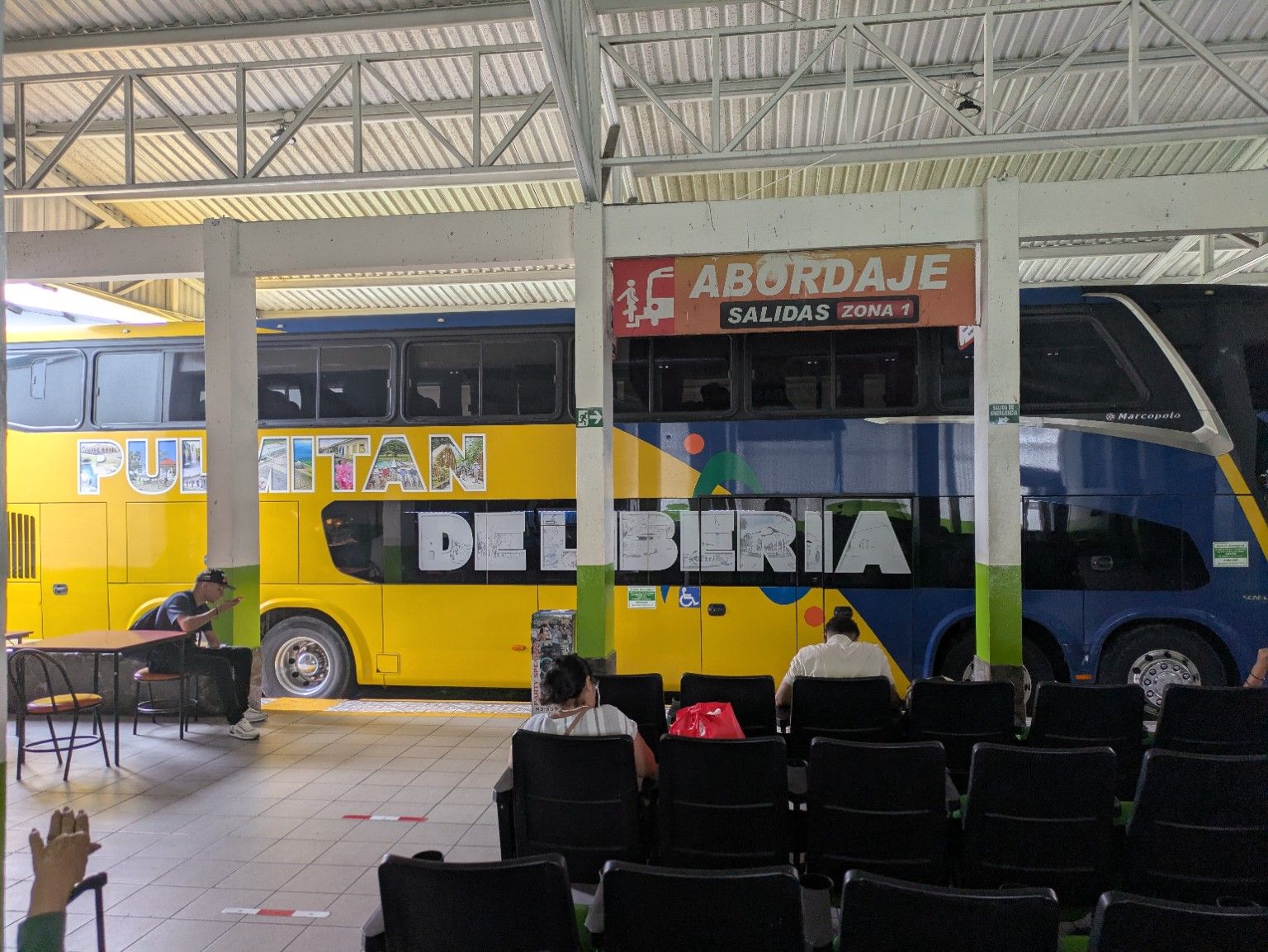
Starting the journey north from San José at the Pulmitan de Liberia terminal.
Departure: Pulmitan de Liberia terminal, San JoséCost: around $11Time: around 5 hoursGood to know: there may be a proper roadside stop for food and bathrooms.
I started at the Pulmitan de Liberia terminal in San José, which is a proper bus station not far from the main downtown area. The bus from San José to Liberia cost around $11, paid in the Costa Rican colón equivalent.
The journey took roughly five hours.
This part of the trip felt fairly straightforward. The bus was local rather than luxury, but it was a normal scheduled service and a practical way to get north without needing private transport.
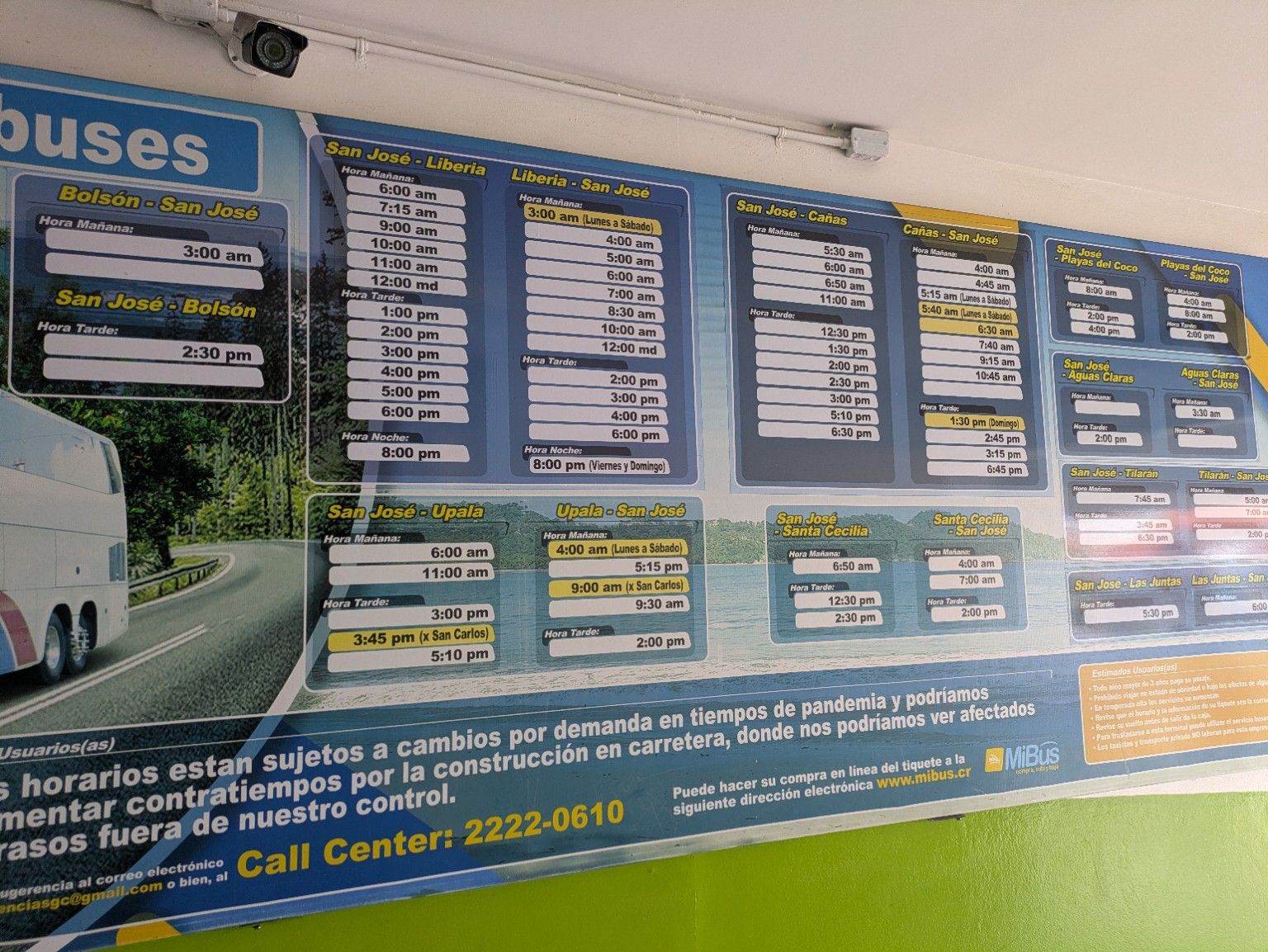
The San José to Liberia route is a regular local bus service, but schedules should always be checked before travelling.
One useful thing to remember with bus travel in Central America is that there can be a difference between “there is a schedule” and “everything will run exactly to the minute.”
The San José to Liberia bus felt more schedule-based, but later in the route I had a slightly more flexible experience with local departure times. That is part of the reason I would avoid planning this journey with tight margins.
The roadside stop: food, bathrooms and a breather
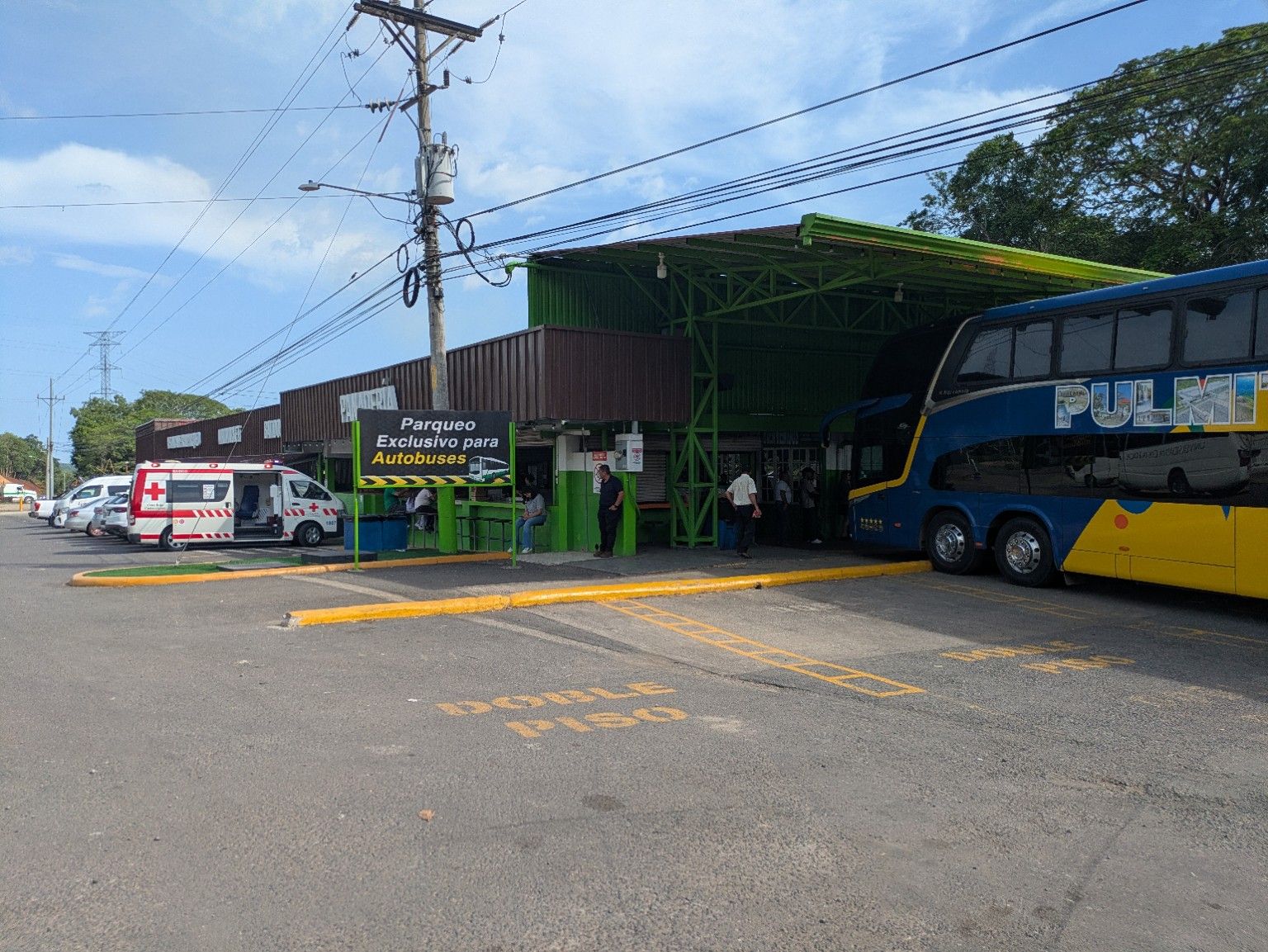
One of the large roadside stops used by buses heading north through Costa Rica. A cheeky stop for food, bathrooms and stretching your legs.
On the way north, the bus stopped at a large roadside restaurant area. These kinds of stops are a useful part of longer bus journeys in Costa Rica and Central America generally.
Passengers had enough time to get food, use the bathroom, stretch their legs, buy snacks and reset before getting back on the road.
This is also one of those small details that makes the route feel easier than it looks on a map. A five-hour bus ride sounds long, but when there is a proper stop in the middle, it becomes much more manageable.
Overnight in Liberia
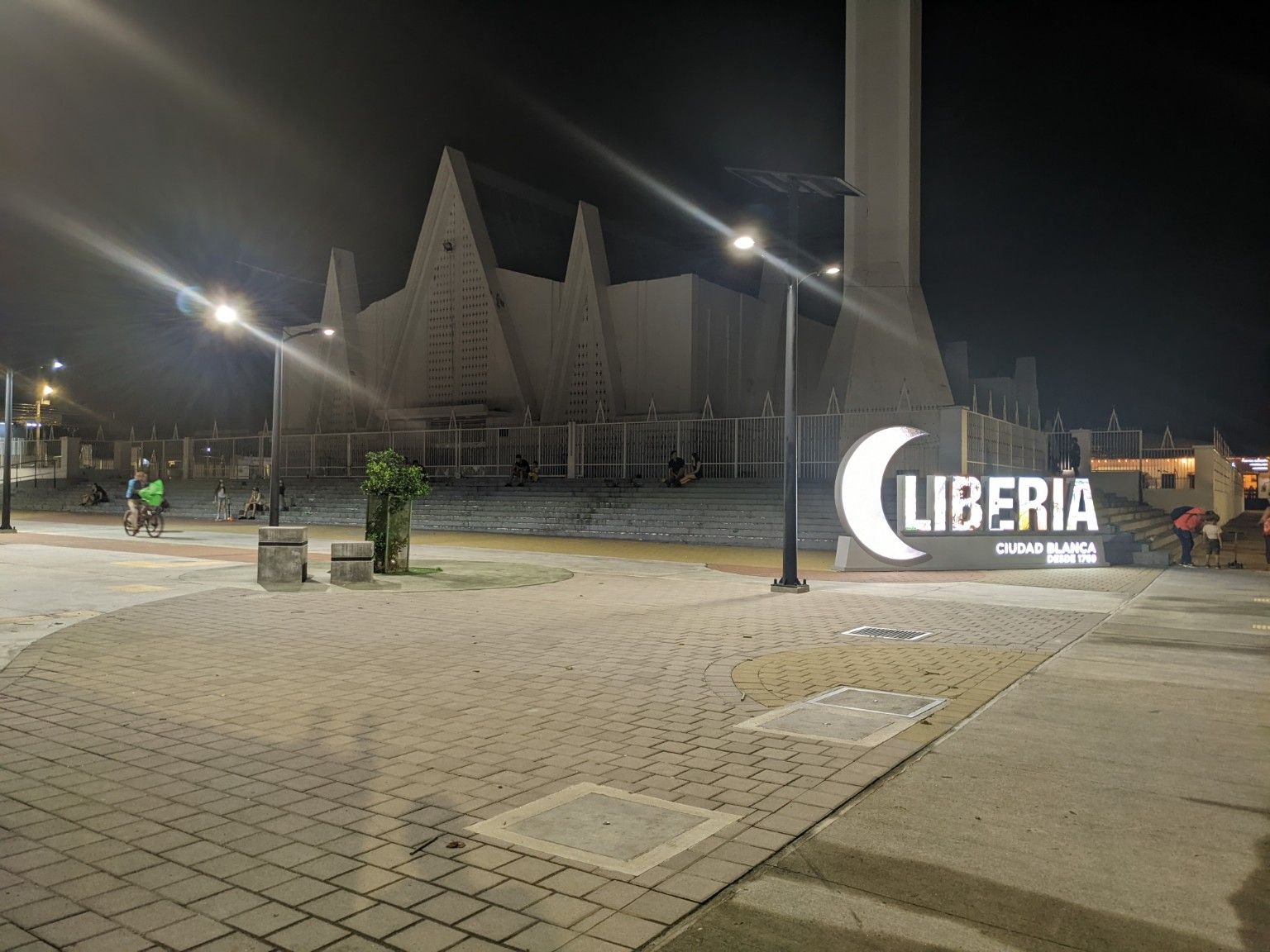
Breaking the journey in Liberia gave the trip a slower rhythm and a proper night’s rest before the border crossing.
I stayed near the main church in central Liberia. The area was convenient, walkable enough, and easy to use as a simple overnight base before heading to the border the next morning.
The hotel itself was basic. No air conditioning, nothing fancy, but fine for what I needed: a bed, a shower and a place to sleep before continuing north.
From the Liberia bus drop-off area, it was either a short taxi or Uber ride, or around a ten-minute walk depending on where exactly you are staying.
This is the part of the route that changes the whole feel of the journey. Instead of waking up in San José and trying to make it all the way to León in one push, I woke up already close to the border.
That made the next day much less intimidating.
Day 2: Liberia to Peñas Blancas
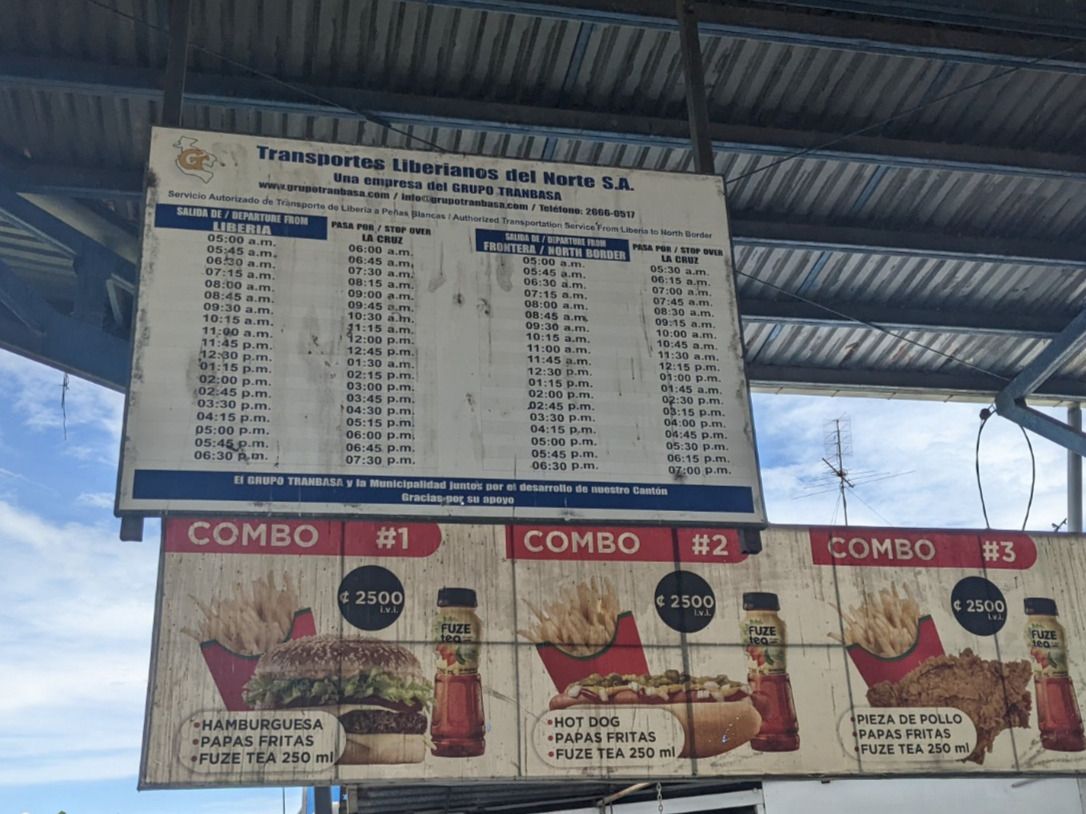
The local bus schedule from Liberia toward La Frontera / Peñas Blancas. In practice, my 8:00 a.m. bus left closer to 8:30.
Departure: Liberia local bus terminal
Destination: La Frontera / Peñas Blancas
Cost: around 2,000 Costa Rican colones, roughly $4
Time: around 1.5 hours
Good to know: leave early and do not build the day around perfect timing.
The next morning, I went to the local bus terminal in Liberia for the bus toward La Frontera / Peñas Blancas.
The schedule board showed regular departures toward the border. My bus was listed for around 8:00 a.m., but in practice it left closer to 8:30 a.m.
This is a good example of how I would think about this route. There is a system. There are buses. This is not random. But you still need a bit of patience and flexibility.
I left Liberia at about 8:30 a.m. and reached Peñas Blancas at around 10:00 a.m.
Crossing at Peñas Blancas
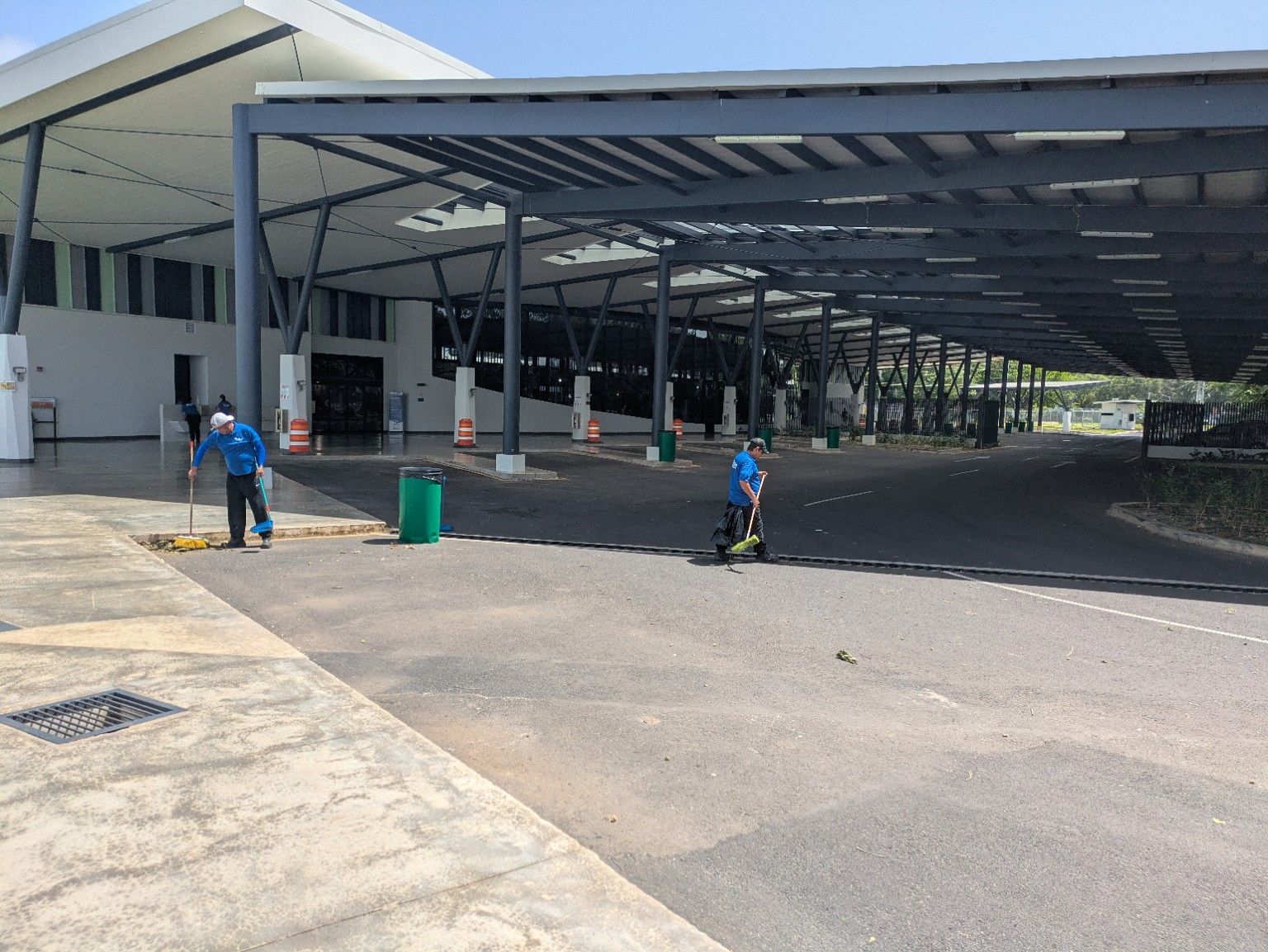
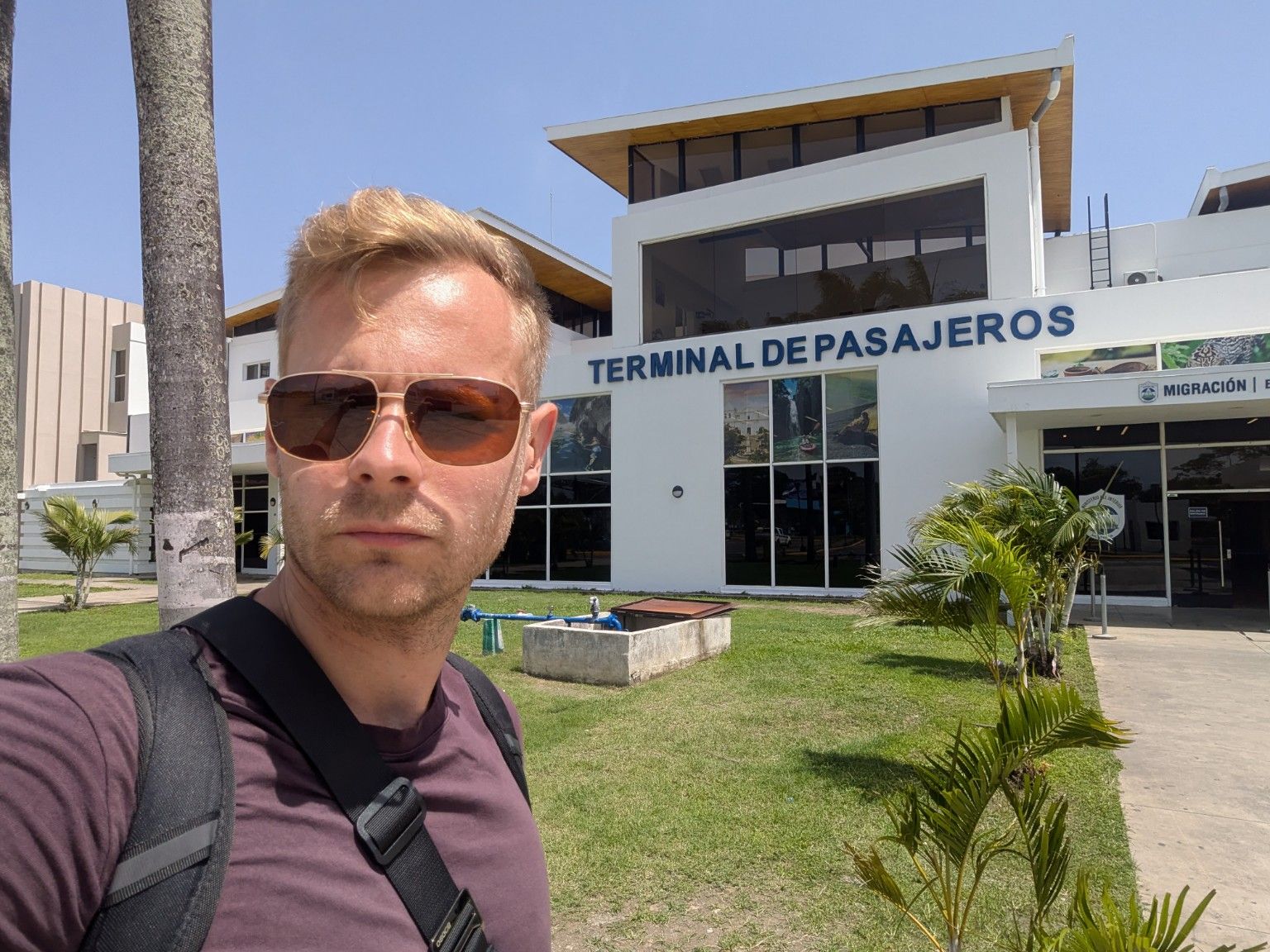
The renovated Peñas Blancas border terminal between Costa Rica and Nicaragua.
Arrival time: around 10:00 a.m.
Waiting time: essentially none on my journey
Good to know: my crossing was on a quiet Sunday, so do not assume it will always be this fast.
I had not crossed at Peñas Blancas for a few years, and the border area looked much better than I remembered. The terminal had been renovated, and the passenger area felt more modern, cleaner and clearer than before.
I crossed on a Sunday, which probably helped. In my case, there was essentially no waiting time. I walked through very quickly on both the Costa Rican and Nicaraguan sides.
That does not mean it will always be like that. Borders can change completely depending on the day, time, traffic, tour buses, paperwork and staffing. But on this journey, the crossing was surprisingly calm.
There was one small classic travel detail: the bathroom did not have toilet paper, so I had to improvise with the paper towels near the sink. Not exactly a major logistical crisis, but a useful reminder that tissues are one of the great underrated travel tools.
When I arrived on the Costa Rican side, there were people around the terminal helping direct passengers through the first step of the process. In my case, I gave the required details, paid a small fee of around $1, and continued into the immigration building.
As always at borders, pay attention to official signage and ask inside the terminal if you are unsure.
After exiting Costa Rica and entering Nicaragua, I walked through without any problems.
The key move: Peñas Blancas to Managua by scheduled coach
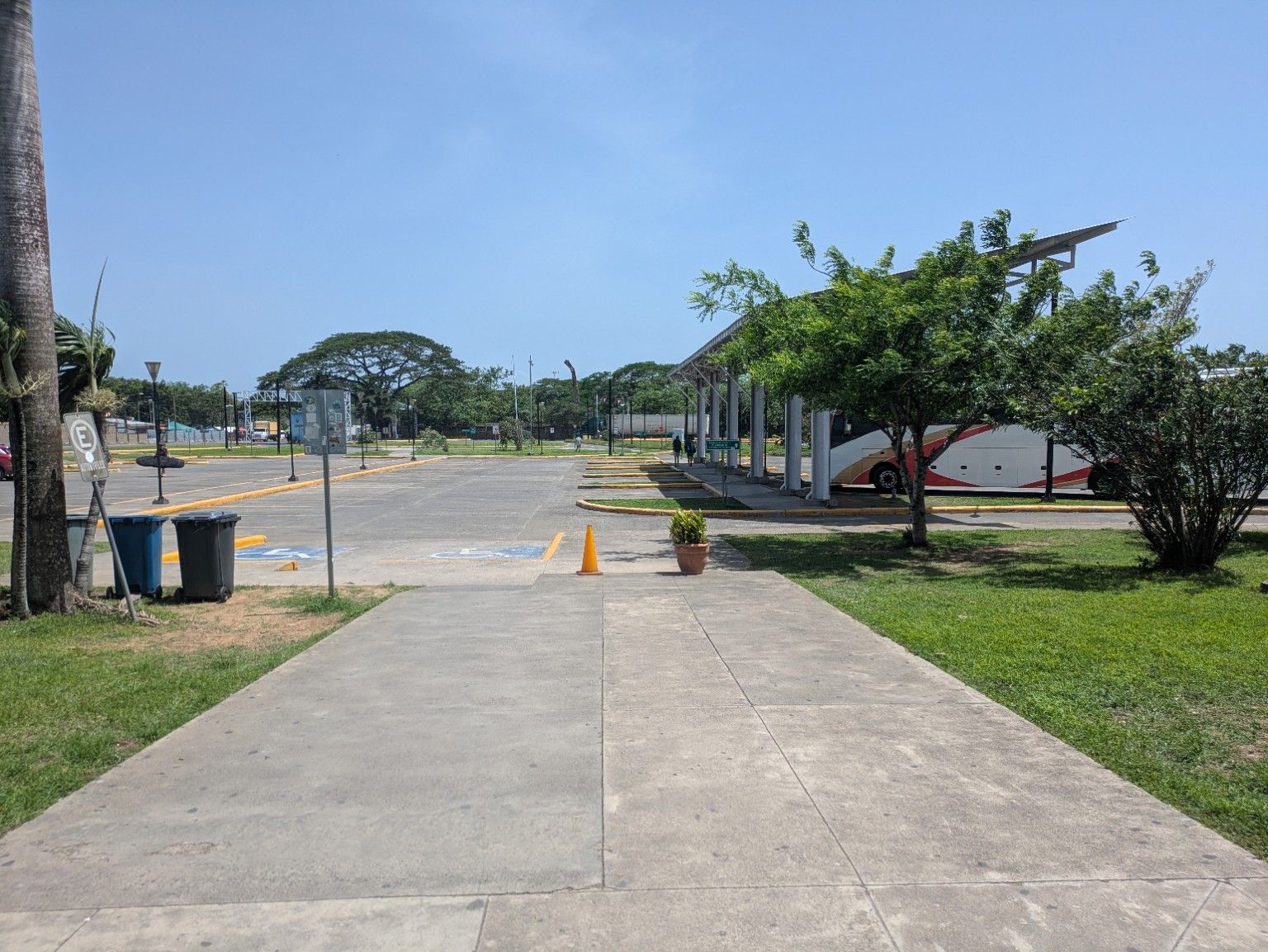
The useful middle ground: a proper coach from Peñas Blancas to Managua, without needing a private transfer.
Departure: Nicaraguan side of Peñas Blancas
Destination: Managua, near Plaza Inter
Company: Central Line
Cost: $15
Good to know: this worked smoothly for me, but check current availability before relying on it.
This was the part of the route that made the whole journey work.
As I was leaving the Nicaraguan side of the border, I noticed a Central Line bus parked in one of the bays. It was a proper coach: comfortable seats, air conditioning, and the kind of bus you would actually want to sit on for a longer journey.
I found the driver and asked if he was going to Managua. He was. The fare was $15 from Peñas Blancas to Managua.
That meant I avoided the two options I had wanted to avoid.
First, I did not need to pay for a private taxi from the border all the way to Managua.
Second, I did not need to piece together local buses through Rivas, Granada or other intermediate stops.
This is the “middle route” that made the journey feel useful. It was still independent travel, but not unnecessarily uncomfortable.
I waited around 15 minutes, then we left.
Arriving in Managua
The Central Line bus dropped me at its depot in Managua, close to Plaza Inter.
From there, I needed to get across Managua to the area where the microbuses leave for León. I used InDrive, which cost around 70 córdobas.
This was probably the only part of the journey where a less experienced traveler might feel slightly pressured. When I got off the bus, several taxi drivers were waiting and trying to get business. They were not dangerous, but they were assertive. Some were even shouting “InDrive” to try to pull me into a conversation.
My advice here is simple: if you are using InDrive, use the app properly. Check the map, check the car, check the license plate, and do not feel rushed into getting into a random taxi just because someone is calling out to you.
Managua is manageable, but it is not the place I would recommend improvising too casually if you are new to the region.
Managua to León by Microbus (Interlocal)
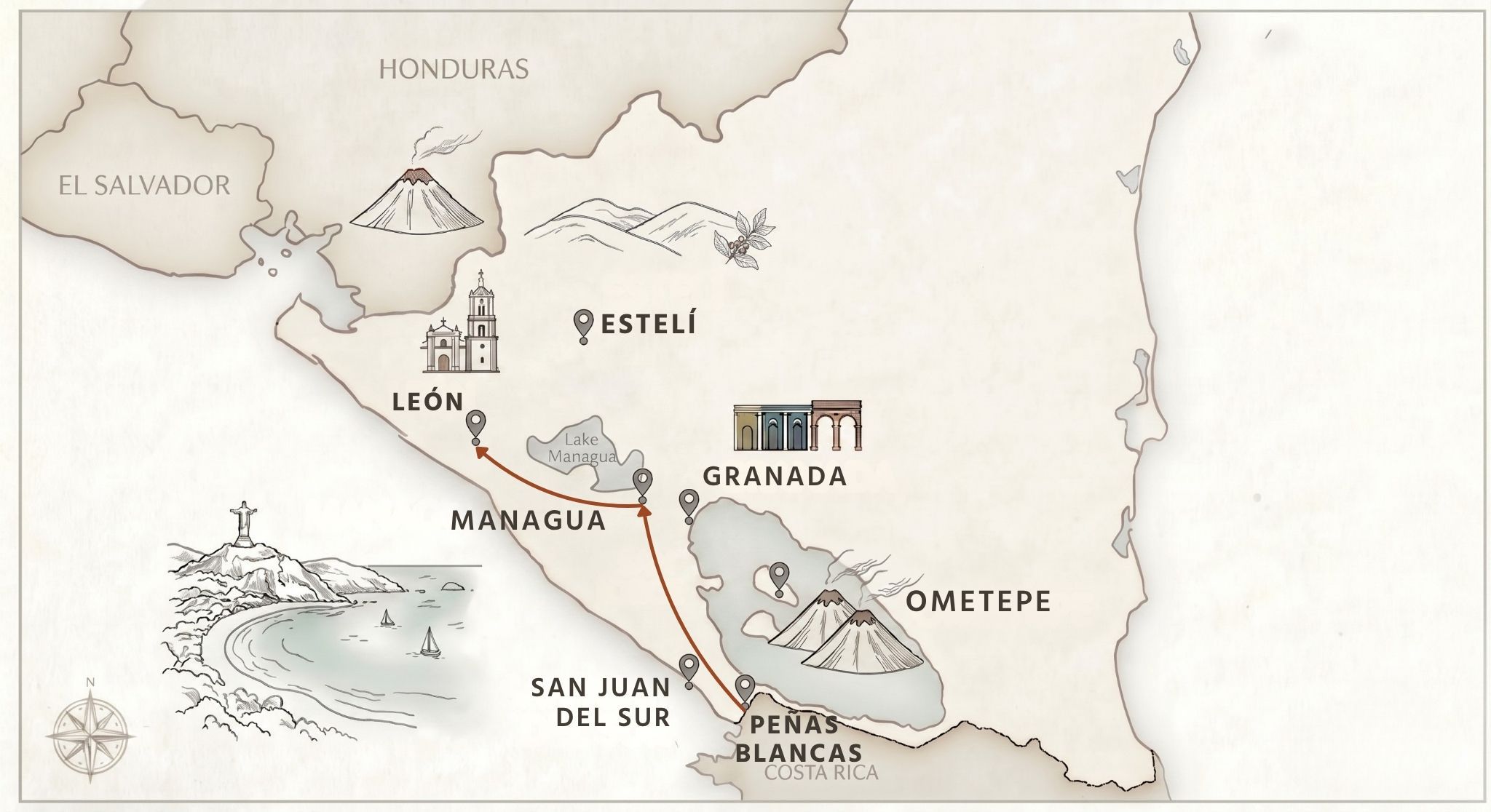
The Nicaraguan part of The Journey
Departure: León microbus area near the old UCA university area
Destination: León
Cost: around 89 córdobas
Arrival in León: around 4:30 p.m.
Good to know: drivers nearly always understand “terminal para León” or “microbuses para León.”
The InDrive took me to the microbus area for León, near the old UCA university area. The university has since been renamed, but most drivers will still understand if you say you need the terminal or microbuses for León.
The fare to León was around 89 córdobas, so only a few dollars.
Once again, the timing worked perfectly for me. I arrived just as a microbus was almost full, got the final seat, and we left almost immediately.
That was one of the reasons this journey felt smoother than expected. At each stage, the connections happened to line up well. That will not always be the case, but when it works, it really works.
I reached León at around 4:30 p.m.
Then, after successfully crossing a country, a border, a capital city and another intercity transfer, I nearly ruined the whole performance by walking away from the microbus without my suitcase.
I had gone about thirty seconds down the street before realizing my bag was still underneath the bus. Luckily, I turned back quickly and recovered it, which is just about within the acceptable window for pretending I had everything under control.
From the León microbus drop-off, I took a local taxi. Taxis in León are generally straightforward, with fixed local fares and no serious negotiation needed. In my experience, León taxi drivers are usually fair, friendly and easy to deal with.
Useful Spanish phrases for this route
You do not need perfect Spanish to do this route, but a few simple phrases help a lot.
“Un boleto para Liberia, por favor.”One ticket to Liberia, please.
“¿Este bus va a La Frontera / Peñas Blancas?”Does this bus go to the border / Peñas Blancas?
“¿Va para Managua?”Are you going to Managua?
“Voy para la terminal de buses a León.”I’m going to the bus terminal for León.
“¿Cuánto cuesta?”How much does it cost?
“¿Dónde se toma el bus para León?”Where do I catch the bus to León?
Pro tips for this route
Start early on Day 2, especially when crossing at Peñas Blancas.
Carry small bills in dollars, córdobas and colones. It makes border fees, snacks, buses and taxis easier.
Bring tissues or toilet paper for the border. This is not glamorous advice, but it is useful advice.
Use InDrive carefully in Managua. Check the map, car model and license plate before getting in.
Do not plan tight onward connections from León on the same day. The route worked smoothly for me, but you should still leave yourself space.
Keep your passport, wallet and valuables with you, not under the bus.
And finally: remember your suitcase before walking away looking very pleased with yourself.
My verdict
I would take this route again.
It was not perfect, and I would not sell it as a polished door-to-door transfer. But as an alternative overland route from San José to León, it worked very well.
The key was breaking the journey in Liberia, crossing the border early, and then catching a proper scheduled coach from Peñas Blancas to Managua. That turned what could have been a tiring and messy journey into something surprisingly manageable.
There was still enough local colour to make it feel like real Central America travel: flexible bus timings, border bathrooms with no toilet paper, assertive taxi drivers in Managua, and a near-disaster involving my forgotten suitcase in León.
But overall, the route was comfortable enough, affordable enough, and much smoother than I expected.
FAQ: San José to León overland via Liberia
Can you travel from San José to León without taking a direct international bus?
Yes. One option is to travel from San José to Liberia, stay overnight, continue to Peñas Blancas, then take onward transport through Managua to León.
This is not necessarily the fastest option, but it can make the journey feel more manageable.
Is Liberia a good overnight stop before Nicaragua?
Yes, if you want to break up the journey. Liberia is practical rather than spectacular for this purpose, but it works well as a northern Costa Rica stop before crossing at Peñas Blancas.
Can you get from Peñas Blancas to Managua by proper coach?
In my case, yes. I was able to take a Central Line coach from the Nicaraguan side of the border to Managua for around $15.
Schedules and availability can change, so check before relying on it.
Is this route good for first-time travelers?
It depends.
Confident independent travelers may find it manageable. Nervous travelers, families with lots of luggage, or anyone wanting guaranteed timing may prefer a direct international bus or private transfer.
How much did the route cost?
Overall $67USD. Not to dissimilar from the Ticabus option.
Transport from Liberia to León cost around $35–40.
Including the overnight in Liberia, the total was higher, but the journey felt much easier than doing everything in one long day.
What is the main advice for this route?
Cross the border early.
This route works best when you leave yourself enough daylight and enough flexibility for the connections. I would not recommend arriving at Peñas Blancas late in the afternoon and hoping everything lines up.
Is it better to do this route in one day or two?
For most travelers, I would recommend doing it in two days.
It is possible to move faster if everything lines up, but the overnight in Liberia makes the journey feel much more comfortable and reduces the pressure around the border crossing.
Need help with the Nicaragua side of your journey?
I’m based in León, and Sunset Viaje is built around helping travelers experience Nicaragua and Central America in a way that feels smoother, more connected and more locally grounded.
If you are planning a route through Nicaragua and want help with transport, local experiences, route advice or a wider itinerary, feel free to get in touch. This route worked well for me — and with a bit of local guidance, journeys like this can become much easier to plan.
Talk with Charlie and Lieven for your Central American adventure